
Charlottesville, VA… June 8, 2026… A new lithium battery disposal program is now available at the Ivy Solid Waste and Recycling Center. The initiative complements existing free programs for the disposal of paint, motor oil, and antifreeze.
Growing concerns in the region about proper lithium battery disposal have sparked new interest in developing a disposal program. Lithium batteries are popular because they’re often lightweight, rechargeable, and capable of storing large amounts of energy, but when discarded incorrectly, they can ignite into dangerous fires. If batteries are accidentally crushed or damaged, they can become unstable and undergo thermal runaway. This process can cause the internal temperature to spike rapidly from 212°F to 1800°F. Hard-to-extinguish fires often result, causing considerable damage and, in some cases, injury or death.
The Process
The free program is offered to residents residing in the City of Charlottesville, the Town of Scottsville, and Albemarle County.
When possible, lithium batteries should be removed from the devices they serve. If the lithium battery cannot be easily accessed or removed, the entire device can be turned in with the battery still installed, provided it fits inside a standard 5-gallon bucket.
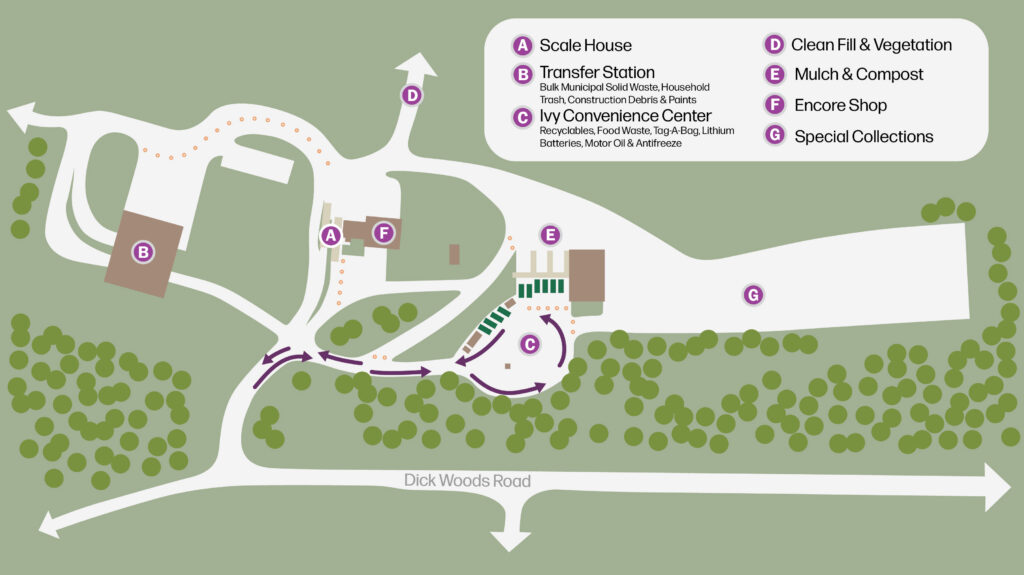
Lithium batteries can be brought to the Ivy Solid Waste & Recycling Center, located at 4576 Dick Woods Road, Charlottesville, VA. The facility is open Monday through Saturday from 7:30 AM to 4:00 PM. The lithium battery drop-off shed is situated in the Convenience Center (location C on the map), alongside our community-facing recycling bins. Lithium batteries can be left in the 5-gallon bucket outside the building.
Identifying Lithium Batteries
Lithium-based batteries are often marked “Lithium”, “Li-ion”, or specific codes that begin with the letters “CR” or “RCR”. Batteries with IATA Class 9 labels also generally contain lithium. Smartphones, laptops, tablets, smartwatches, Bluetooth speakers, headphones, wireless mice, wireless keyboards, e-readers, cordless power tools, robot vacuum cleaners, rechargeable flashlights, electric razors, electric toothbrushes, hair trimmers, e-bikes, e-scooters, trail cams, video doorbells, baby monitors, remote control cars, drones, game controllers, handheld gaming devices, greeting cards, handheld fans, hearing aids, and action cameras can all contain lithium batteries.
Fun Activities for Kids
To help spread the word, kid-friendly handouts have been added to RSWA’s Lithium Battery Disposal webpage to help share information about proper lithium battery disposal.
Program Restrictions
The program is intended for residents and not commercial entities. Commercial entities may qualify to participate in RSWA’s Commercial Hazardous Waste Program offered twice per year. Additional details for this program are available at https://rivannasolidwaste.org/accepted-items/#special-collections.
More Information
Additional information about the lithium battery program, including frequently asked questions and videos of recent fires at the Ivy Solid Waste & Recycling Center can be found at https://rivannasolidwaste.org/lithium-battery-program/.